The guide
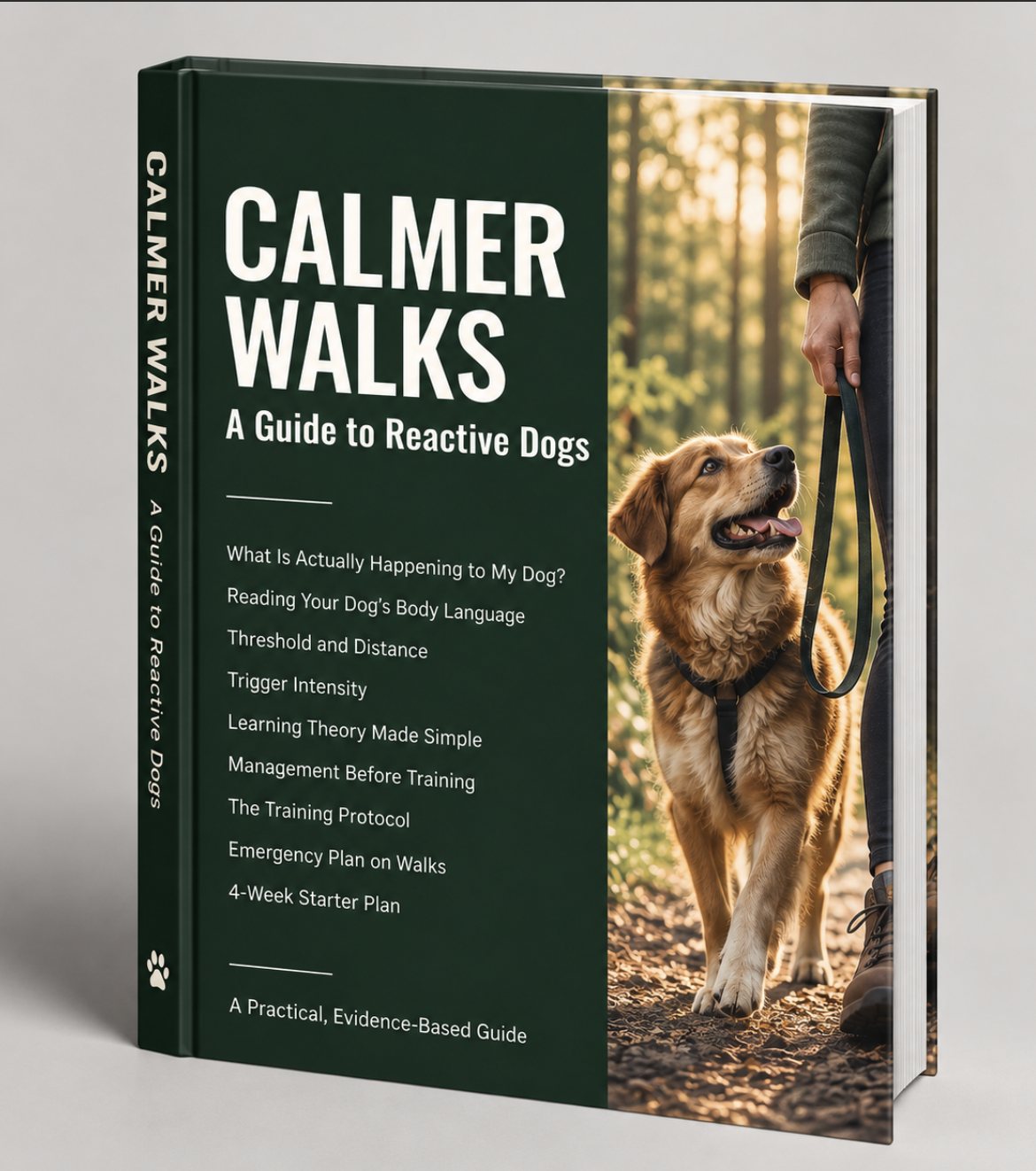
Calmer Walks
A Practical Guide for Owners of Leash-Reactive Dogs.
Written for you if your dog reacts strongly to things you meet on walks — other dogs, strangers, children, joggers, cyclists, or similar. Nineteen chapters, a training protocol, an emergency plan, and a 4-week starter plan you can begin this week.
Who it's for
Owners whose dog barks, lunges, freezes, growls, or fixates at things encountered on walks — regardless of how long it's been going on.
What it gives you
A framework for understanding your dog, practical management tools, and a realistic, structured way to start training.
What it isn't
A diagnosis, a guarantee, or a replacement for an individual assessment from a qualified behaviour professional or vet when that's needed.
Table of contents
Inside the guide
Nineteen chapters, moving from understanding to a concrete plan.
- 01How to Use This GuideA framework for understanding and a practical way forward.
- 02What Is Actually Happening to My Dog?Understanding the invisible steps behind what you see.
- 03Reading Your Dog's Body LanguageRecognise the signals before the situation escalates.
- 04Threshold and DistanceWorking at the distance where your dog can still think and choose.
- 05Trigger IntensityDistance is not the only factor that matters.
- 06Learning Theory Made SimpleThe mechanics of how behaviour is learned and changed.
- 07Management Before TrainingPractical changes that reduce difficult moments today.
- 08The Training ProtocolA step-by-step, reward-based approach to build on.
- 09Emergency Plan on WalksWhat to do when a trigger appears without warning.
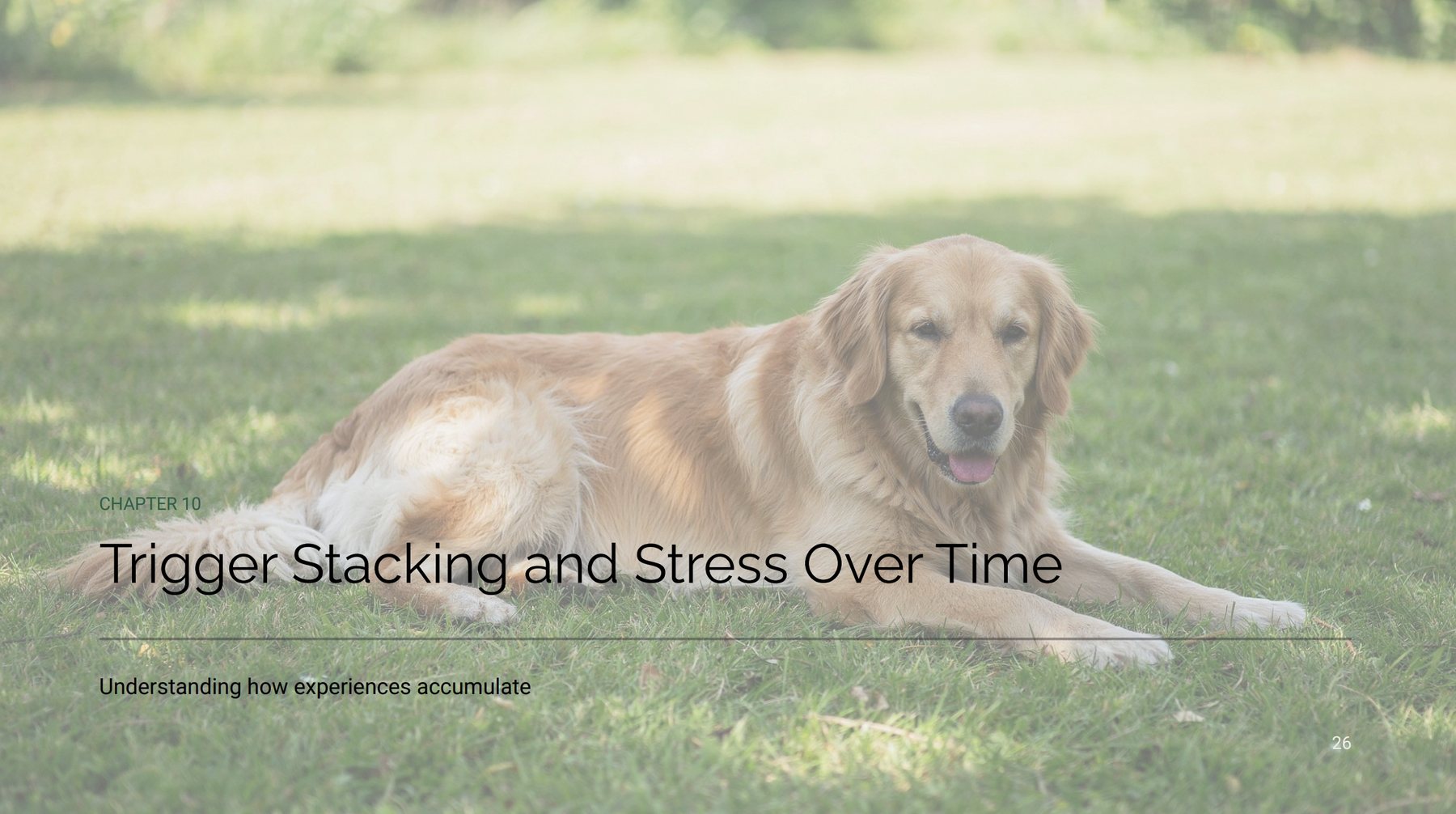
- 10Trigger Stacking and Stress Over TimeWhy some days are harder than others.
- 11What to Avoid — and WhyMethods that can backfire, explained through mechanism, not blame.
- 12Five Common MythsWidely repeated ideas about reactivity that don't hold up.
- 13Reactivity Towards Other Dogs and PeopleWhere the approach differs by trigger type.
- 14Safety FirstWhen to involve a vet or qualified behaviour professional.
- 154-Week Starter PlanA realistic pace to begin putting it into practice.
- 16Tracking — Follow Your ProgressA simple system for noticing change over time.
- 17FAQDirect answers to the questions we hear most.
- 18ReferencesThe sources this guide draws on.
- 19Professional Review ChecklistFor the trainers and behaviourists reviewing this guide.
A page from the guide
A look inside
Our approach
Reward-based, and honest about the evidence
Calmer Walks is built on reward-based, force-free principles — the kind that let your dog feel safe enough to learn. Where the research is settled, we say so plainly. Where it's genuinely debated among professionals, we mark it rather than presenting it as fact.
You won't find promises that your dog will be "fixed," and you won't find shortcuts that rely on fear, pain, or intimidation. Reactivity is a description of behaviour, not a life sentence — and not a verdict on your dog's character.
Calmer Walks
Get the full guide
A structured, practical guide you can start using on your very next walk.
Get Calmer WalksCalmer Walks is educational information intended to help you understand and manage reactive behaviour. It is not a diagnosis, and it does not replace an individualised assessment from a qualified veterinarian or behaviour professional — particularly in cases involving a bite history or serious aggression.